.png)


The AI Revolution at Crossroads: Redefining Markets and Humanity

Artificial Intelligence was created as a niche field that used to focus mainly on research and on creating machines that were capable of performing tasks that normally require human intelligence. Early innovators thought of AI as a tool that would solve complex problems, automate repetitive work, and enhance human capabilities.

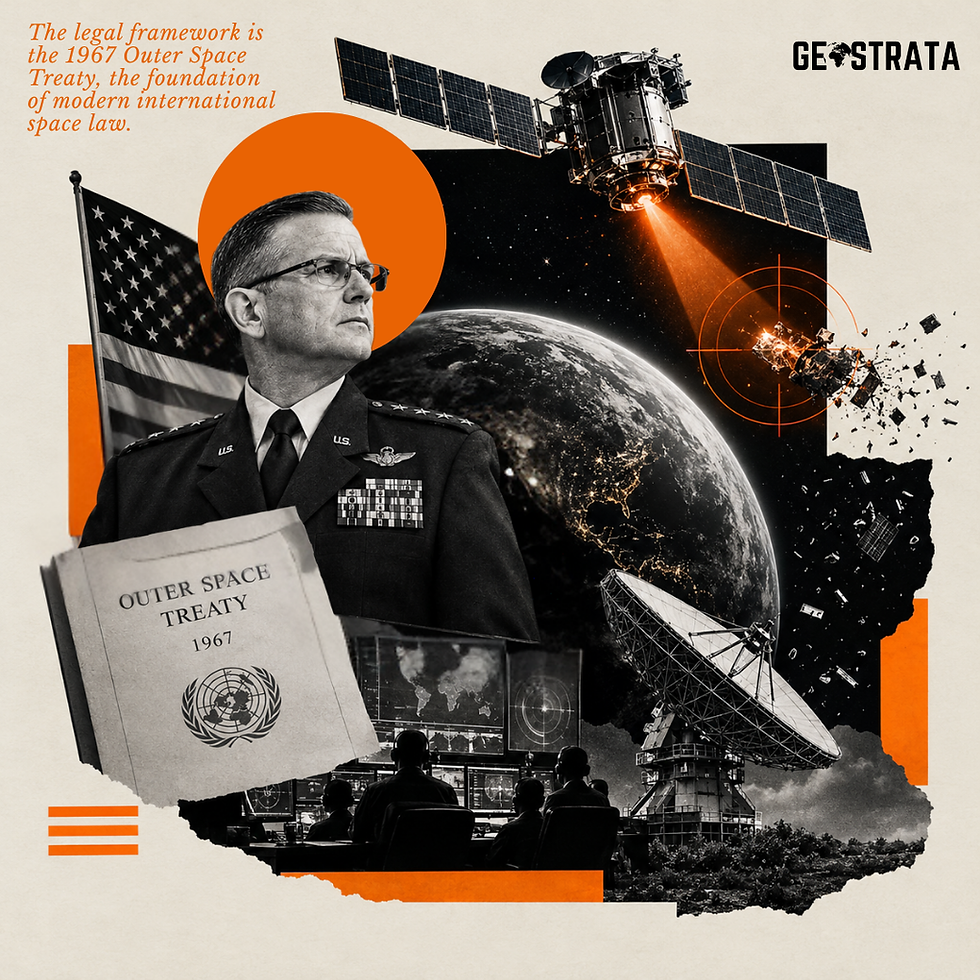
Illustration by The Geostrata
For decades, the development of AI was limited to just laboratories and specific industries and focused on improving efficiency. But now AI has developed into something greater due to improvements in computing power, data access, and machine learning.
What was once an advanced form of technology is now a major part of almost all aspects of human existence.
Today's extensive use of AI includes everything from assisting humans in doing basic cognitive tasks like writing text, creating images, making business decisions, providing customer service, impacting financial markets, and completing tasks.
A technology that was originally designed to assist is now beginning to influence the way that our economies operate and how our societies are structured. There are many questions that need to be answered regarding these changes. In addition to providing new business opportunities, AI will also present challenges to current forms of employment, shift the distribution of economic resources, and affect social behaviours in an entirely new way.
ARTIFICIAL INTELLIGENCE: A HISTORY OF INFLUENCE
AI has developed over the years, starting in the 1950s when computer scientists were trying to determine if machines could act like humans and reason logically or make decisions. It was related to research more than being a technology because there were many restrictions like computer processing capabilities, the amount of data available for processing, and technical limitations.
The transition happened when three factors changed which were development of the computer itself, the availability of data, and advancements in how machines learn, which made it possible for them to recognise images, interpret languages, and create content.
What is striking is that many people who helped create AI have also criticised it. Like Geoffrey Hinton, known as the "Godfather of AI," said that "someday AI will exceed human intellect" and mentioned ways in which it can be misused, like spreading misinformation and committing cyber crimes.
He also said that there needs to be a way to control AI and keep it safe before it's too late. Statements of many such people have been on similar lines, and they should be a reminder to government, industry, and individuals to focus on creating safe ways to use AI rather than expanding its current use.
IMPACT ON ECONOMY
Like the industrial revolution introduced mechanised production and the internet revolution connected the world digitally, the AI revolution is creating a world where intelligence is automated. The two revolutions brought automation, but with AI having the ability to perform cognitive tasks, it means that not only is it changing how businesses make decisions but how they function. While it promised to increase productivity and innovation, it is deeply challenging sectors of the economy.
AI assistance helps in increasing efficiency and allows firms to produce more output with fewer resources, eventually contributing to economic growth. But, in this manner, productivity will come at a difficult trade-off, which is unemployment.
Workers whose skills become obsolete will be completely replaced by AI, and hence they will face the direct impact in terms of lower wages, job insecurity, and income inequality.
It is also impacting competitiveness in the market. Companies that have larger datasets, advanced algorithms, and better computing infrastructure will gain a huge advantage over companies that lack AI systems in the workplace. This means companies with a concentration of technology will make it difficult for smaller non-AI-guided companies to compete and eventually widen the gap in income disparities.
For India, the AI revolution represents both opportunity and challenge. The large pool of software engineers, startup culture, digital infrastructure, and increased internet user base provide a very strong foundation for AI adoption.
But a large proportion of Indian workers are employed in sectors that are easily replaceable by AI, and this can reduce the demand for entry-level jobs. Small and medium-sized enterprises will also face challenges as they have limited resources and lack technical leverage.
SOCIAL CONSEQUENCES
Artificial Intelligence is also transforming our society by changing how people communicate, learn, work, and access information. While AI-based platforms are personalising content and improving healthcare, education, and public services, it is also increasing concerns about privacy, misinformation, and social inequality. The rise of deepfakes, online fraud, and AI-generated content has blurred the difference between reality and manipulation.
Similarly, the education sector is getting impacted as easy access to AI-generated content reduces academic integrity, critical thinking, and problem-solving skills. Overdependence on AI for school and college work means a future generation that lacks basic analytical reasoning and intellectual curiosity.
The most profound impact is on human relationships. As AI companions, chatbots and virtual assistants are becoming more sophisticated and capable of giving emotional support, questions around ethical dependency, mental health, and authenticity keep rising. A society where humans don't interact with each other and rely on machines for companionship weakens interpersonal connections and healthy communities.
WAY FORWARD
The challenges posed by AI can be addressed through responsible governance, ethical innovation, and investment in people. Governments must establish clear regulations to ensure transparency, protect privacy, and prevent misuse while encouraging innovation.
Education systems should prioritize digital literacy, critical thinking, and lifelong learning to prepare workers for an AI-driven economy.
Businesses should use AI to complement human capabilities rather than replace them wherever possible. In India, expanding digital infrastructure, supporting AI research, and ensuring equitable access to technology across urban and rural areas are essential. With balanced policies and inclusive development, AI can become a catalyst for sustainable economic and social progress.
BY VASUDHA
TEAM GEOSTRATA


I think the biggest challenge isn't whether AI will become more capable it almost certainly will. The real question is whether governments, businesses, and society can adapt quickly enough with sensible regulations and ethical standards. We've seen how technological shifts can also influence where companies choose to operate. For example, this article about Coinbase's decision to move its incorporation from Delaware to Texas highlights how legal and regulatory environments can shape business strategy: disruptionbanking.com/2025/11/12/why-is-coinbase-leaving-delaware-for-texas/. AI will likely face similar debates as its role in the economy continues to expand.