.png)


Pakistan’s Mineral Promise: Strategic Breakthrough or High-Risk Bet for the US?

The emergence of critical minerals is increasingly seen as a major driver of both national security and economic growth. This centrality of “future minerals” is driving a fundamental transformation in U.S. foreign policy. Washington's engagement with partner nations is being determined by a vision to diversify and secure supply chains despite global disruption. Within this evolving policy framework, Pakistan has emerged as an unexpected beneficiary due to the country's reported array of minerals such as copper, gold, lithium, cobalt, and rare earth elements (REEs).

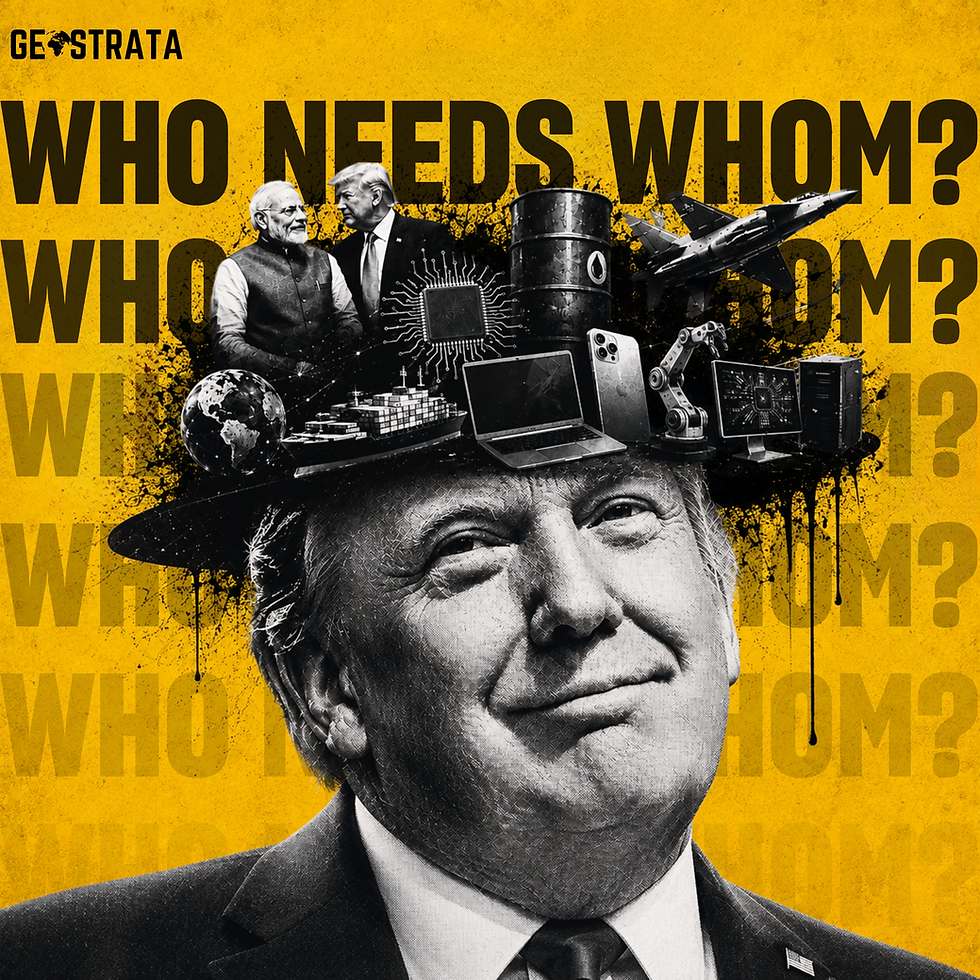
Illustration by The Geostrata
Pakistan’s geological potential and Washington's structural necessity to reduce dependence on China have pushed Islamabad back into Washington’s strategic orbit. This article seeks to examine the risks associated with these investments, ranging from expanding Chinese engagement to potential security concerns, and the absence of a structured regulatory framework. It also seeks to evaluate whether Pakistan’s mineral wealth holds prospects to emerge as anything more than a long-term strategic bet for the United States.
STRATEGIC CALCULATION AND HISTORIC MISTRUST
The signing of an MoU between US Strategic Metals and Pakistan's Frontier Works Organization (FWO) established a framework for exploring and refining critical minerals and rare earth elements. The bilateral cooperation between the two countries strengthened further on February 7, 2026, when Washington approved $1.3 billion in financing for the Reko Diq copper-gold project. The investment marked Pakistan’s inclusion in Project Vault, a $10 billion US initiative aiming to reengineer global critical mineral supply chains. The U.S. is now betting on Pakistan as a vital partner to help secure the rare materials that power modern tech and defence.
Though both countries are witnessing warming accords in the present, historical geopolitical volatility and mistrust continue to overshadow the current alignment. The events of 9/11, Pakistan's giving shelter to Osama bin Laden, and its close alliance with China continue to erode Washington’s confidence in the country. Despite the strengthening mineral alignment between both nations, the underlying scepticism is likely to remain a persistent friction point.
It is also worth noting that Washington’s newfound mineral diplomacy with Pakistan will inevitably strain its rapport with India. Addressing these concerns, Marco Rubio assured that engagement with Pakistan will not affect ties with India.
But the evolving landscape differs from polite diplomatic reassurances. Over the past year, President Trump has targeted India on international forums, imposed hefty tariffs affecting key Indian sectors, and undermined India’s “strategic autonomy” in its engagement with Russia.
On the other hand, there is a visible deepening of the U.S.–Pakistan economic cooperation, particularly in the critical minerals domain. In the long run, it may deteriorate Washington's relationship with New Delhi, weakening its posture in South Asia and diluting efforts to build resilient economic corridors to counter Beijing. Washington's difficulty lies in establishing a calibrated partnership with Pakistan that does not disrupt or alter its continued strategic alignment with India.
CHINA AS A STRATEGIC CONSTRAINT
China is a major constraint to US interests in Pakistan. It has utilised experience and capabilities in advanced technologies to establish itself as a major contributor to Islamabad’s nascent industry. Much of this cooperation has been facilitated through the China-Pakistan Economic Corridor (CPEC), which has provided Islamabad with both technical assistance and capital.
Beijing currently holds stakes in four of the country's six active critical mineral projects, particularly in copper and gold. China has strategically invested in the mineral-rich province of Balochistan, holding large ownership stakes in one of two copper mines in the region. It alone imports around 95% of copper ores mined from Pakistan and concentrates around 98% to export to other countries.
This entrenched Chinese footprint complicates the entry of new actors, particularly the United States. For instance, while the Reko Diq project has recently attracted U.S.-backed financing, nearby operations such as Saindak remain closely tied to Chinese firms. Due to the escalating rivalry between China and the U.S. to secure mineral resources, Washington perceives China’s extensive control as a significant strategic and national security threat.
This concern is rooted in efforts made by both nations to secure "future minerals" like copper, gold, and rare earths that are critical for defence manufacturing, renewable energy, and high-tech industries.
Adding further to US discomfort is phase two of the CPEC, which, if successful, could transform Pakistan’s mining from raw extraction to an industrial powerhouse. Islamabad’s close alignment with China may enhance Pakistan’s industrial capacity, but it introduces structural risks for U.S. investors, including limited operational autonomy and strategic exposure
GOVERNANCE CONSTRAINTS IN PAKISTAN'S MINING SECTOR
Another significant barrier responsible for hindering advancement strategies is the lack of a consolidated mineral policy. The sector was governed by six regulatory frameworks, eight legislative instruments, and 36 sets of rules, with overlapping federal and provincial jurisdiction.
In 2010, the 18th Amendment to the Constitution of Pakistan guaranteed provinces exclusive jurisdiction over minerals, promoting provincial autonomy and demarcation of power.
However, in reality, the provinces have exercised tardiness in modernising colonial-era regulations and streamlining progress. Pakistan is also plagued by endemic corruption and a weak judicial system, which further erodes investor confidence by making investment risky and complicated.
While the country promises strategic potential, its ability to translate that potential into sustained and reliable outcomes remains uncertain. Furthermore, security challenges, particularly in Balochistan, have emerged as another major impediment to the development of Pakistan's mineral sector. Despite possessing vast reserves of copper, gold, and other strategic minerals, the province continues to witness insurgent activity and attacks on infrastructure, foreign personnel, and development projects.
Consequently, Pakistan repeatedly monetizes the promise of Reko Diq during periods of economic distress, but fails to resolve the structural instability. Although potential provided impetus for initial investment, the country's complex landscape, fraught with security loopholes, regulatory and geopolitical complications arising from overlapping interests, continues to constrain long term opportunities.
For Washington, the challenges extend beyond securing access to critical minerals; it lies in navigating an increasingly contested environment characterised by instability, insurgency, and entrenched Chinese influence.
BY KAVYANJALI S TOMAR
TEAM GEOSTRATA


Your perspective on this topic is both unique and enlightening. I admire your ability to convey such detailed information in an accessible way. pips nyt
I wasn't expecting much from eggy car, but the balance mechanics are genuinely fun. It’s the kind of game that makes you say "one more try" over and over.
I found Drive Mad through a recommendation thread and ended up spending the entire evening trying to clear a few tricky levels. It’s easy to learn but hard to master.